


Cricket is a sport that demands skill, endurance, and precise technique. Among the many roles on a cricket team, fast bowlers place some of the greatest physical demands on their bodies. The bowling action requires explosive movement, rapid rotation, and repeated stress on several muscle groups.
Because of these demands, cricket bowling injuries are a common concern for both amateur and professional players. Research suggests that a significant proportion of cricket-related injuries occur in the upper limb, particularly among bowlers who repeatedly deliver the ball at high speeds.
In fact, studies often show that up to 50% of cricket injuries involve the upper body, including the shoulders, elbows, and back. These injuries typically develop when muscles and joints are exposed to repeated strain without sufficient strength or recovery.
Understanding cricket bowling injuries and learning how to strengthen key muscle groups can help bowlers improve performance while reducing unnecessary strain on the body.
Why Cricket Bowling Injuries Occur
The bowling action in cricket is a complex movement that combines speed, coordination, and power.
During a single delivery, a bowler performs several physical actions:
- A fast run-up
- Sudden deceleration before release
- Rotational trunk movement
- Powerful shoulder and arm motion
This sequence places significant mechanical load on the body.
Because bowlers may deliver hundreds of balls during training or competition, the repetitive nature of the movement increases the risk of cricket bowling injuries.
If certain muscles are not strong enough to support the action, other parts of the body may compensate. Over time, this compensation can lead to strain in the shoulders, elbows, or lower back.
Upper Limb Injuries in Cricket

One of the most common types of cricket bowling injuries involves the upper limbs.
The shoulder joint is particularly vulnerable because it performs repeated overhead movements during bowling.
Common areas affected include:
- Shoulder muscles and tendons
- Elbow ligaments and tendons
- Forearm muscles
Players may experience symptoms such as stiffness, fatigue, or discomfort during or after bowling sessions.
Strengthening the surrounding muscles can help support joint stability and reduce excessive strain during delivery.
Building a Strong Core for Bowling

The core muscles play a critical role in the bowling action.
These muscles stabilize the spine and transfer power from the lower body to the upper body during delivery.
A strong core helps bowlers:
- Maintain balance during the run-up
- Generate power during rotation
- Control body alignment during delivery
When the core is weak, the lower back and shoulders may experience additional stress, increasing the risk of cricket bowling injuries.
Core exercises such as planks, rotational movements, and stability drills can help support the bowling action.
Strengthening the Shoulders
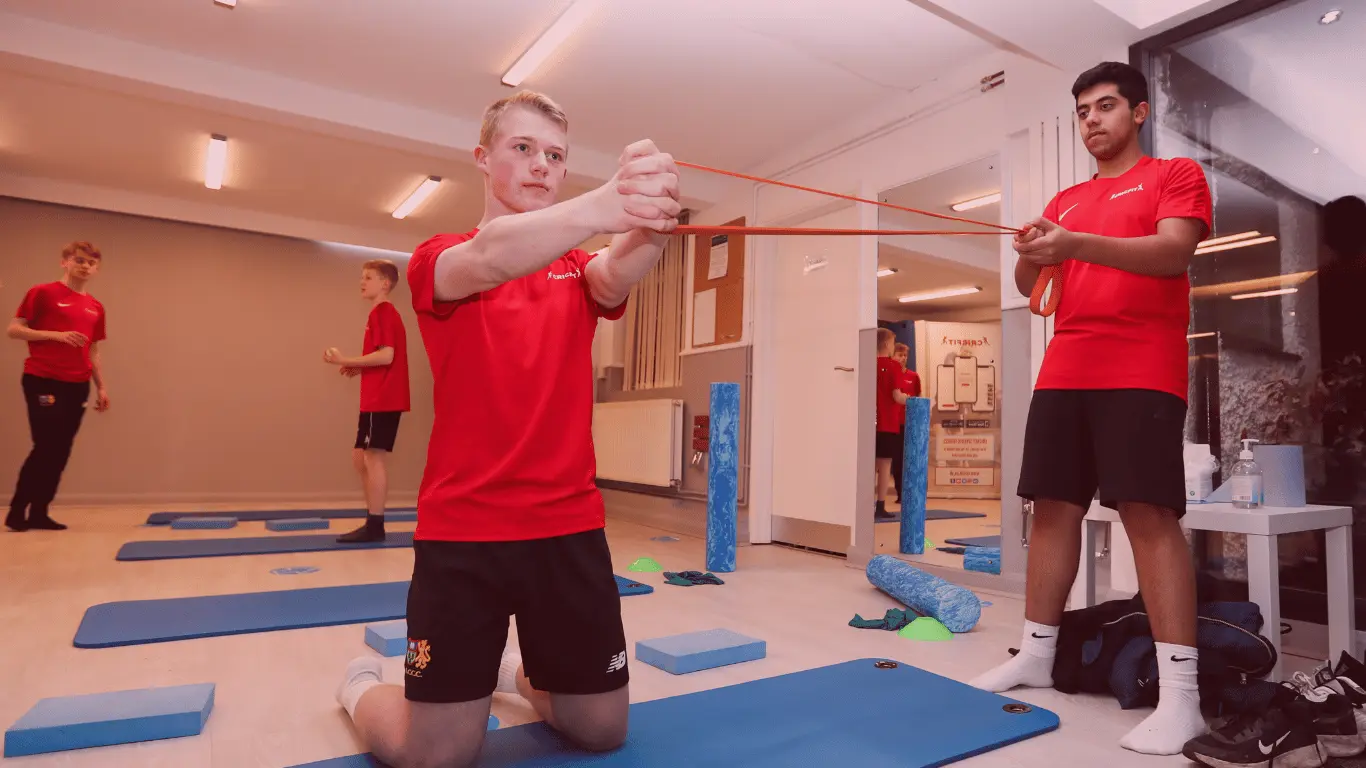
Shoulder strength is essential for bowlers who want to deliver the ball with both speed and control.
The shoulder joint relies heavily on surrounding muscles for stability during high-speed movement.
Strengthening these muscles can help bowlers maintain consistent delivery while reducing the likelihood of cricket bowling injuries.
Examples of helpful exercises include:
- Resistance band shoulder rotations
- Scapular stability exercises
- Controlled overhead strengthening drills
These exercises help support the muscles that control shoulder movement during bowling.
Supporting the Back During Bowling
The back plays a key role in the rotational movement that occurs during bowling.
When a bowler rotates the torso during delivery, the muscles of the back help generate power while maintaining spinal stability.
Weakness or fatigue in these muscles may contribute to cricket bowling injuries, particularly in the lower back.
Strengthening the back through targeted exercises can help support posture and improve rotational control during delivery.
Combining Strength and Technique
Improving bowling performance involves more than just increasing strength.
Technique, training volume, and recovery habits all influence the likelihood of cricket bowling injuries.
Players can support long-term performance by focusing on:
- Gradual increases in bowling workload
- Proper warm-up routines
- Balanced strength training
- Adequate recovery between sessions
By building strength in the core, shoulders, and back, bowlers can improve power, control, and overall durability on the field.
Staying Strong for the Long Cricket Season
Cricket seasons often involve long training periods and multiple matches.
Maintaining physical strength throughout the season helps reduce fatigue and support consistent performance.
Understanding cricket bowling injuries and strengthening the key muscles involved in bowling can help players continue developing their skills while protecting their bodies from unnecessary strain.


